top of page

Our Services

Anorectal Manometry

Anorectal manometry is a test to evaluate your anal and rectal muscles.

Capsule Endoscopy

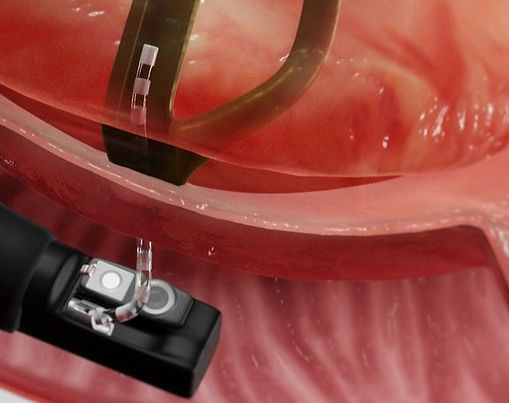
A capsule endoscopy (pill cam endoscopy) uses a pill cam that you swallow that contains a miniature video camera. The camera sends pictures to a data recorder, which you will wear on a belt

Colonoscopy

Colonoscopy is a procedure where a doctor uses a thin, flexible tube with a camera (called a colonoscope) to look inside your rectum and colon (large intestine). It helps find problems like swollen tissue, ulcers, polyps, or cancer.

ERCP

ERCP is an endoscopic procedure used to inject dye into the bile and pancreas ducts. X-ray pictures are then taken.

Endoscopic Ultrasound

An endoscopic ultrasound (EUS) is a specialized procedure that blends:
Endoscopy —use of a scope to look at the inside lining of the gastrointestinal (GI) tract.
Ultrasound — use of high frequency sound waves to see detailed images of the bowel wall and nearby organs or structures.

Esophageal Manometry

Esophageal manometry (muh-NOM-uh-tree) is a test that shows how well the esophagus is working. It measures muscle contractions of the esophagus as water moves through to the stomach.

Flexible Sigmoidoscopy

Sigmoidoscopy is a test during which a doctor uses a short, thin (about the width of your little finger), flexible tube with a tiny camera on the end to check the rectum and the lower end of the colon for polyps and cancer.

H. Pylori Breath Test

An Hp breath test is a simple and completely painless test that can detect the presense of H. Pylori in the inner lining of your stomach or small intestine

Hemorrhoid Banding

During a hemorrhoid banding procedure, a rubber band is placed around the base of an internal hemorrhoid.

Percutaneous Endoscopic Gastrostomy (PEG)

Gastroenterologists use percutaneous endoscopic gastrostomy (PEG) to surgically insert a feeding tube (often called a PEG tube) into a patient’s stomach — bypassing the mouth and esophagus — so the patient can get the needed nutrients and fluids.

Upper Endoscopy

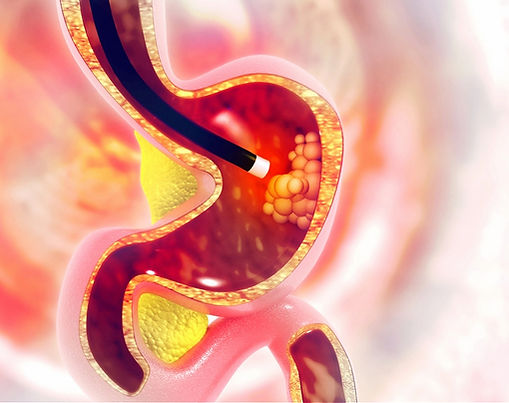
Upper endoscopy (EGD) enables the physician to look inside the esophagus, stomach, and duodenum (first part of the small intestine). The procedure might be used to discover the reason for swallowing difficulties, nausea, vomiting, reflux, bleeding, indigestion, abdominal pain, or chest pain.

pH Monitoring

pH monitoring refers to tests like 24-hour pH/impedance or wireless Bravo monitoring, used to diagnose GERD by measuring stomach acid and reflux episodes in the esophagus.

bottom of page